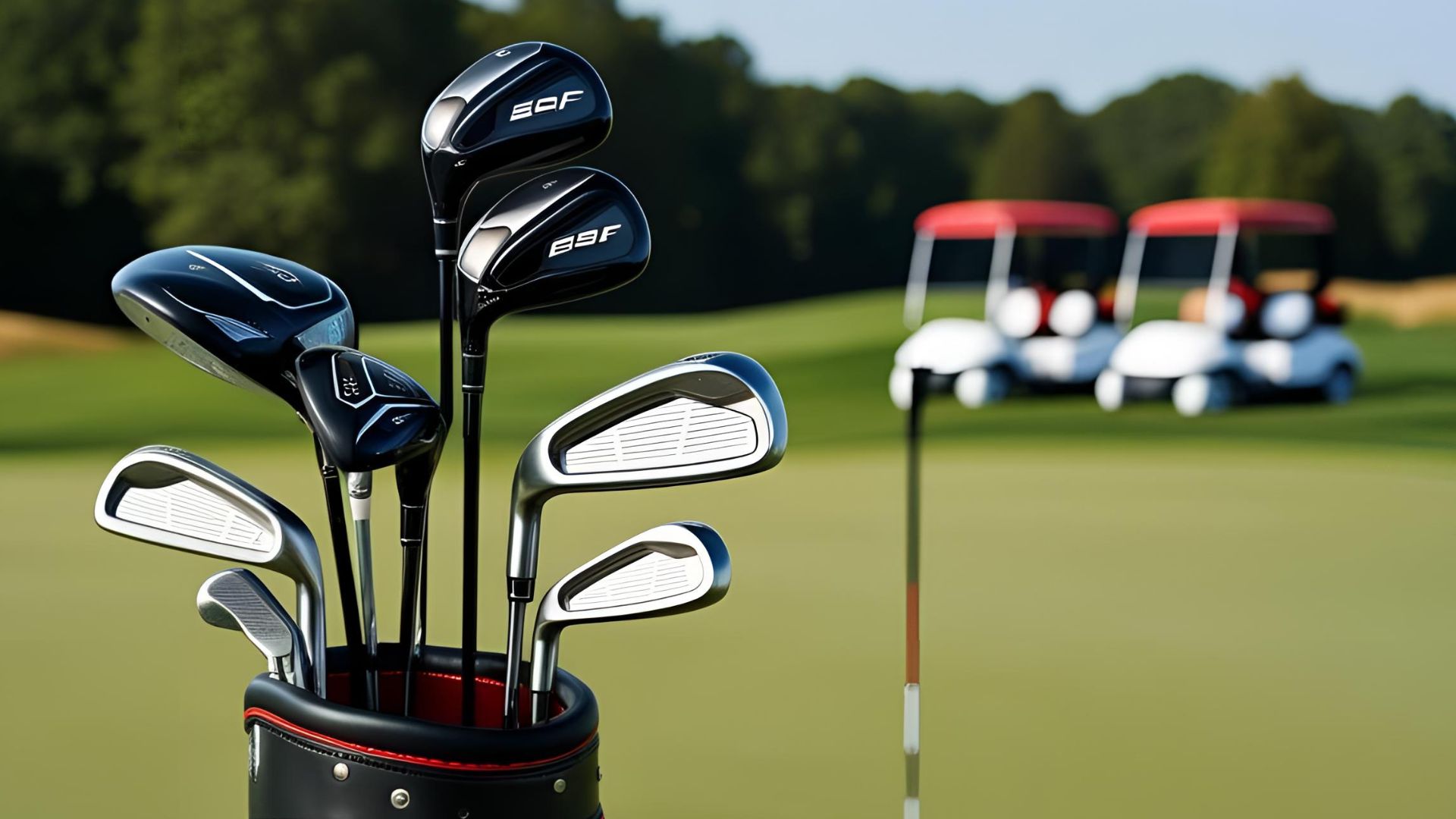
Choosing the right long-game clubs can make a significant difference in your performance on the golf course. While drivers receive much of the attention, fairway woods and hybrids often determine whether you can confidently attack long par 4s, reach par 5s in two, or escape difficult lies. Understanding Fairway Woods vs Hybrids helps golfers build a bag that complements their swing, improves consistency, and fills important distance gaps.
Modern club technology has blurred the line between fairway woods and hybrids. Both are designed to launch the ball high, deliver forgiveness, and replace difficult-to-hit long irons. However, each type of club has unique strengths that make it better suited for specific golfers and playing situations. Knowing when to use each club can lead to lower scores and greater confidence throughout your round.
Why Club Selection Matters
Every club in your bag should serve a clear purpose.
Carrying multiple clubs that produce similar distances creates unnecessary overlap, while leaving large distance gaps makes course management more difficult.
Understanding Fairway Woods vs Hybrids allows golfers to build a balanced set that covers every yardage efficiently.
Choosing the right combination also increases confidence when facing challenging shots.
What Is a Fairway Wood?
A fairway wood features a larger clubhead than a hybrid and is designed to produce maximum distance from the fairway or tee.
Common lofts include:
- 3-wood
- 5-wood
- 7-wood
- 9-wood
Fairway woods generate high ball speeds while launching the ball with relatively low spin.
They are excellent options for long approach shots and controlled tee shots on narrow holes.
Advantages of Fairway Woods
Fairway woods offer several key benefits:
- Longer carry distance
- High launch
- Excellent performance from the tee
- Strong ball speed
- Increased forgiveness
- Smooth turf interaction
Golfers seeking maximum distance after the driver often rely on fairway woods.
Potential Drawbacks of Fairway Woods
Although forgiving, fairway woods can still be challenging from tight lies.
Their larger clubheads require precise contact to produce consistent results.
Golfers with slower swing speeds or steeper attack angles sometimes struggle to launch lower-lofted fairway woods effectively.
What Is a Hybrid?
Hybrids combine characteristics of both fairway woods and irons.
They feature compact clubheads with deeper centers of gravity that make them easier to launch than traditional long irons.
Common hybrid lofts include:
- 2-hybrid
- 3-hybrid
- 4-hybrid
- 5-hybrid
Hybrids are designed to provide forgiveness while maintaining versatility from a wide variety of lies.
Advantages of Hybrids
Hybrids have become extremely popular because they provide:
- Easy launch
- Excellent forgiveness
- Versatility
- Improved rough performance
- Better control
- Confidence at address
Many golfers find hybrids significantly easier to hit consistently than both long irons and low-lofted fairway woods.
Potential Drawbacks of Hybrids
Hybrids typically produce less overall distance than fairway woods of similar loft.
Golfers with faster swing speeds may also find hybrids launching slightly higher than desired.
Additionally, some players who naturally hook the ball may notice hybrids encouraging a stronger draw.
Distance Comparison
Distance is one of the biggest differences in Fairway Woods vs Hybrids.
Fairway woods generally deliver:
- Higher ball speed
- Longer carry
- More rollout
- Greater overall distance
Hybrids sacrifice a small amount of distance in exchange for improved forgiveness and consistency.
For golfers seeking maximum yardage, fairway woods usually have the advantage.
Forgiveness Comparison
Both club types are forgiving, but in different ways.
Fairway woods provide forgiveness on center and slight off-center strikes thanks to their larger clubheads.
Hybrids, however, excel when contact isn’t perfect or when hitting from uneven lies, rough, or difficult turf conditions.
For many recreational golfers, hybrids are easier to hit consistently.
Performance From Different Lies
Course conditions often determine which club performs better.
Fairway woods work best from:
- Fairway
- Tee box
- Closely mown turf
Hybrids excel from:
- Light rough
- Thick rough
- Fairway
- Uneven lies
- Tight lies
Their compact shape allows the clubhead to move through grass more efficiently.
Launch and Trajectory
Fairway woods generally launch the ball higher while producing lower spin.
This combination creates long carry distances with excellent rollout.
Hybrids launch slightly lower but produce additional spin, allowing shots to stop more quickly on the green.
The ideal trajectory depends on the type of shots you face most often.
Who Should Choose Fairway Woods?
Fairway woods are excellent for:
- Faster swing speeds
- Golfers seeking maximum distance
- Confident ball strikers
- Players using controlled tee shots
- Golfers attacking long par 5s
Players who regularly strike the center of the clubface often benefit most from fairway woods.
Who Should Choose Hybrids?
Hybrids are ideal for:
- Beginners
- High-handicap golfers
- Moderate swing speeds
- Seniors
- Golfers replacing long irons
- Players seeking versatility
Many golfers carry multiple hybrids because they perform well in so many situations.
Can You Carry Both?
Absolutely.
Many golfers carry both fairway woods and hybrids to maximize versatility.
A common setup includes:
- Driver
- 3-wood
- 5-wood
- 4-hybrid
- 5-hybrid
This combination provides excellent distance coverage while maintaining forgiveness throughout the long game.
The exact setup should depend on your yardages rather than simply filling every club slot.
Getting Properly Fitted
A professional club fitting helps determine:
- Loft gaps
- Shaft flex
- Shaft length
- Clubhead design
- Launch conditions
Proper fitting ensures that both fairway woods and hybrids complement each other without creating unnecessary overlap.
Many golfers gain consistency simply by optimizing their long-game setup.
Conclusion
The debate over Fairway Woods vs Hybrids has no universal winner because each club serves a different purpose. Fairway woods offer exceptional distance, powerful ball flight, and excellent performance from the tee and fairway. Hybrids provide unmatched versatility, forgiveness, and confidence from challenging lies, making them valuable additions for golfers of nearly every skill level.
Rather than choosing one over the other, consider how each club fits into your overall bag setup. The best combination depends on your swing speed, preferred shot shape, typical course conditions, and distance gaps. By selecting clubs that complement your game, you’ll enjoy more consistent long shots and greater confidence every time you step onto the course.
FAQ
1. Are hybrids easier to hit than fairway woods?
Yes. Hybrids are generally easier to launch and more forgiving from a variety of lies, especially for recreational golfers.
2. Should beginners carry a fairway wood or a hybrid?
Most beginners benefit from hybrids because they are easier to hit consistently and perform well from rough and fairway lies.
3. Which club hits farther, a fairway wood or a hybrid?
A fairway wood typically produces greater carry distance and total distance than a hybrid with a similar loft.
4. Can a hybrid replace a fairway wood?
Yes. Many golfers replace lower-lofted fairway woods with hybrids if they struggle to hit woods consistently.
5. Is it okay to carry both fairway woods and hybrids?
Absolutely. Many golfers carry both to create proper distance gaps and maximize versatility across different course conditions.