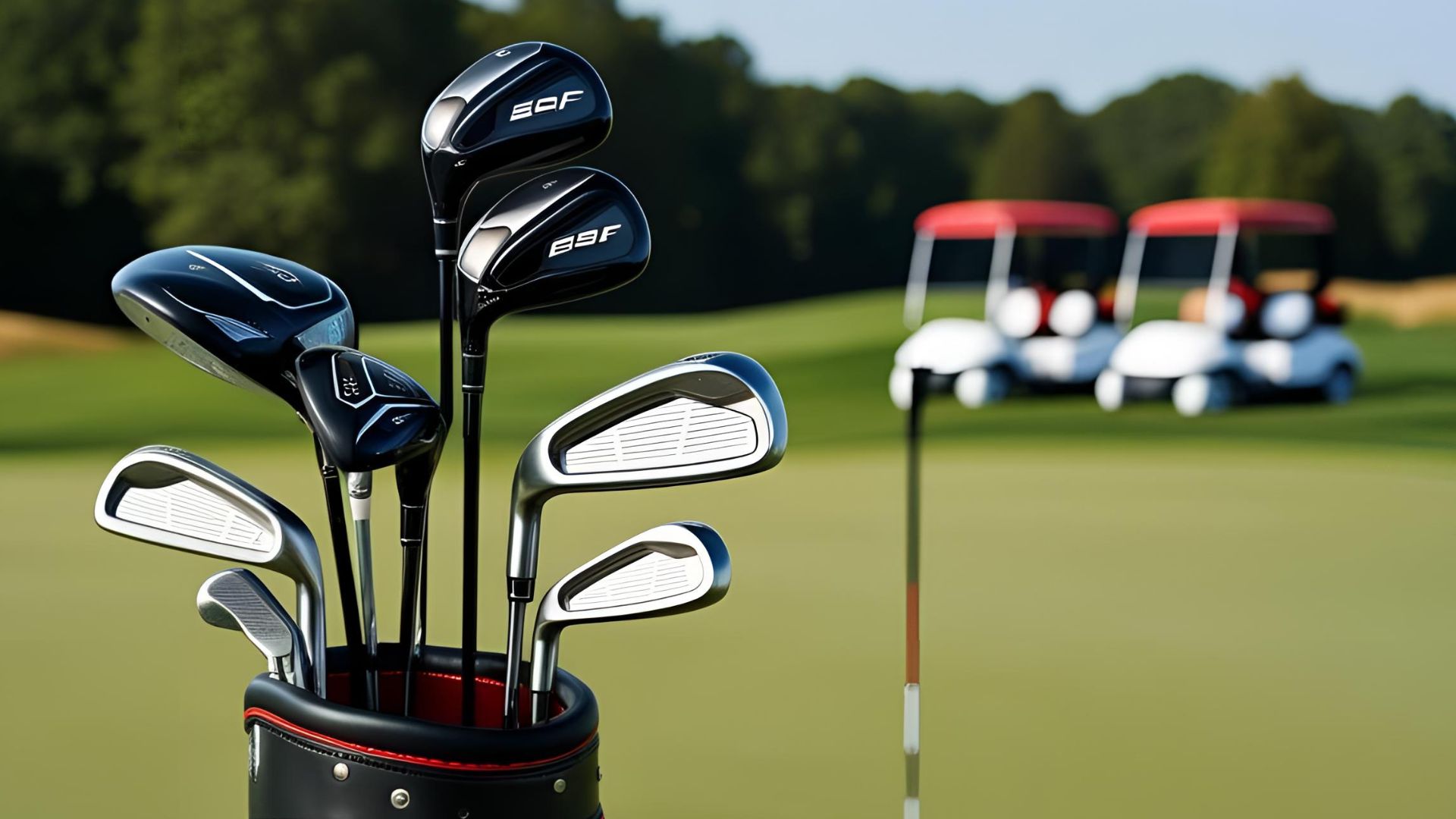
The hybrid vs fairway wood debate matters because both clubs can fill important distance gaps at the top of your golf bag. Fairway woods generally offer more distance and a higher potential launch. Hybrids, meanwhile, combine useful forgiveness with versatility from several lies. Choosing correctly can make long approaches much easier.
For many golfers, these clubs are alternatives to difficult long irons. However, they do not perform exactly the same job.
Fairway woods typically have longer shafts and larger clubheads. Therefore, they can generate more clubhead speed and distance.
Hybrids have shorter shafts and more compact heads. As a result, many golfers find them easier to control.
Your swing also matters. A golfer who sweeps the ball may feel comfortable with fairway woods. Someone who prefers an iron-like strike may perform better with hybrids.
Rather than choosing based on popularity, consider your distances, common misses, course conditions, and existing clubs.
This guide will help you decide which option deserves space in your bag.
Understanding the Basic Differences
Although both clubs can replace long irons, their designs are noticeably different.
A fairway wood has a relatively broad clubhead and a longer shaft. Common options include the 3-wood, 5-wood, and 7-wood.
Hybrids combine characteristics of irons and woods. Their heads are smaller than fairway woods but larger and deeper than traditional long irons.
This design difference is central to the hybrid vs fairway wood comparison.
Fairway woods can create significant ball speed and carry distance. Their wider soles can also move effectively across the turf when contact is slightly heavy.
Hybrids typically provide greater control because of their shorter shafts.
Furthermore, their compact heads can perform well from rough and difficult lies.
Neither design is automatically easier for everyone. Therefore, your swing and typical playing conditions should guide the decision.
Which Club Usually Goes Farther?
Fairway woods generally produce more distance when compared with hybrids of similar loft.
Shaft length is one reason.
A longer shaft can generate additional clubhead speed. Fairway woods may also be designed to launch the ball efficiently with relatively low spin.
For golfers considering hybrid vs fairway wood clubs primarily for distance, the fairway wood often has an advantage.
However, loft matters significantly.
A strong hybrid may travel farther than a high-lofted fairway wood. Therefore, you cannot compare clubs based only on their names.
Your strike quality matters too.
A perfectly struck 3-wood may produce excellent distance, but that advantage disappears if you rarely make solid contact.
A shorter hybrid that consistently finds the center of the face may deliver better average distance.
Compare your normal shots rather than your longest shots.
Golf rewards repeatable yardages more than occasional perfect strikes.
Which Is Easier to Hit?
Many golfers find hybrids easier to hit because their shorter shafts provide additional control.
The compact design can also make setup feel familiar to players who are comfortable with irons.
However, some golfers prefer fairway woods.
Their wider soles and larger heads can inspire confidence, especially when hitting from clean fairway lies.
Therefore, there is no universal winner in the hybrid vs fairway wood discussion.
Swing style can influence your preference.
Golfers who strike down on the ball more like an iron may naturally prefer hybrids. Players who use a shallower sweeping motion may find fairway woods easier.
Confidence matters as well.
If one club looks uncomfortable behind the ball, you may struggle to make a committed swing.
Test both from real turf whenever possible rather than relying entirely on shots from a practice mat.
Launch and Ball Flight Differences
Fairway woods often produce a high, powerful trajectory.
Their low center of gravity can help golfers launch the ball from the fairway. Higher-lofted woods, such as 5-woods and 7-woods, can be particularly effective for players who struggle with long irons.
Hybrids can also launch easily.
However, their flight may be more penetrating depending on the model, loft, and golfer.
When evaluating hybrid vs fairway wood performance, think about the trajectory your game needs.
A golfer who struggles to generate height may benefit from a fairway wood.
Higher launch can help long shots carry hazards and stop more quickly on greens.
Meanwhile, golfers who naturally hit the ball very high might prefer the flight characteristics of certain hybrids.
Launch-monitor testing can reveal which club produces the most useful trajectory rather than simply the highest one.
Performance From the Fairway
Clean fairway lies provide ideal conditions for both clubs.
However, fairway woods can be particularly effective when you need maximum distance.
A 3-wood or 5-wood can provide significant yardage on long par 5s and lengthy approaches.
The wide sole can glide across the turf when your strike is reasonably shallow.
Meanwhile, a hybrid offers more of an iron-like setup.
In the hybrid vs fairway wood comparison, hybrids may provide additional confidence when accuracy matters more than maximum distance.
Their shorter shafts can help you control strike location and direction.
Consider the shots you regularly face.
If you frequently need 200-plus yards from good fairway lies, a fairway wood may fill that role effectively.
If your priority is hitting a specific distance with greater control, a hybrid might be the better option.
Performance From the Rough
The rough can dramatically change club performance.
Long grass may wrap around the hosel or reduce clean contact.
Hybrids often perform well in these situations because their compact heads can move through grass more easily than larger fairway woods.
This gives hybrids an important advantage in the hybrid vs fairway wood debate for golfers who frequently miss fairways.
However, lie quality still matters.
A deeply buried ball may require a short iron or wedge regardless of which long club you carry.
Do not automatically attempt a long recovery because you have a hybrid.
Evaluate how much of the ball is visible.
From moderate rough, a hybrid can provide an excellent combination of distance and control.
Fairway woods may still work from light rough, especially when the ball sits up.
The worse the lie becomes, however, the more attractive the compact hybrid often becomes.
Which Is Better From the Tee?
Both clubs can be excellent alternatives to driver.
A fairway wood generally provides greater distance. Therefore, it can be useful on tight par 4s where driver brings too much trouble into play.
A hybrid sacrifices some distance but may offer additional control.
When deciding between hybrid vs fairway wood options from the tee, consider the landing area rather than simply choosing the longest club.
Suppose driver carries into a narrow section of fairway.
A 3-wood might leave you short of the trouble while still providing strong distance.
On an even tighter hole, a hybrid could be safer.
Tee height matters too.
Tee fairway woods relatively low so you can make a normal sweeping swing. Hybrids usually need only a small amount of elevation.
Practice these shots before relying on them during an important round.
Forgiveness on Mishits
Forgiveness is more complicated than simply comparing head sizes.
Fairway woods usually have larger clubheads and can provide strong stability on off-center contact.
However, their longer shafts can make the center of the face harder to find consistently.
Hybrids have smaller heads but shorter shafts.
Therefore, the hybrid vs fairway wood forgiveness question depends partly on your ability to make repeatable contact.
If you consistently strike a hybrid near the center, it may provide much better real-world forgiveness.
Likewise, a golfer who feels comfortable with fairway woods may benefit from their larger footprint.
Pay attention to your typical miss during testing.
Do not compare only perfect strikes.
Hit enough shots to see how each club performs when contact moves toward the heel, toe, top, or bottom of the face.
The club that produces better poor shots may be the more useful option.
Hybrids Can Replace Long Irons
Hybrids became popular because many golfers struggle with traditional long irons.
A 3-hybrid or 4-hybrid can replace a similarly numbered iron, although actual lofts and distances vary between manufacturers.
The larger head can provide additional forgiveness.
A hybrid’s center of gravity can also make launching long shots easier.
Therefore, golfers considering hybrid vs fairway wood clubs should first examine which existing club needs replacement.
If your 4-iron rarely produces useful shots, a hybrid may provide a natural solution.
However, do not assume the number on the hybrid directly matches your iron.
A 4-hybrid might travel significantly farther than your 4-iron.
Always compare actual carry distances.
The objective is to create useful gaps throughout your bag rather than collecting clubs with matching numbers.
Higher-Lofted Fairway Woods Are Worth Considering
The 3-wood receives plenty of attention, but it can be difficult to hit from the ground.
Higher-lofted options may be easier.
A 5-wood provides additional loft while retaining much of the distance potential of a fairway wood.
Meanwhile, 7-woods have become popular among golfers seeking easy launch and softer landing long shots.
This adds another dimension to the hybrid vs fairway wood decision.
You are not simply choosing between a 3-wood and hybrid.
A 7-wood might compete directly with a strong hybrid for a position in your bag.
The fairway wood may launch higher and stop more quickly.
The hybrid might offer better performance from rough and greater control in windy conditions.
Test different lofts before making assumptions based on club category.
Distance Gapping Should Drive Your Decision
Every club should serve a clear purpose.
Suppose your driver carries 240 yards and your longest iron carries 175.
You have a large distance range to cover.
The right combination might include a 3-wood at 220 yards and a hybrid at 195.
For another golfer, the ideal hybrid vs fairway wood configuration could look completely different.
Perhaps a 5-wood carries 200 yards while a 4-hybrid travels 180.
The exact numbers do not matter as long as the gaps are useful.
Measure carry distance rather than total distance whenever possible.
Carry is more reliable when you need to clear water, bunkers, or other hazards.
Also compare trajectory and dispersion.
Two clubs may travel similar distances while producing completely different flights.
Choose the club that fills both a yardage and shot-shape requirement.
Consider Your Swing Speed
Swing speed can influence which long clubs are easiest to launch.
Golfers with slower speeds may struggle to generate enough height with low-lofted clubs.
For those players, higher-lofted fairway woods can be extremely useful.
Their design can promote launch while providing plenty of carry.
When comparing hybrid vs fairway wood clubs, slower swingers should pay particular attention to peak height and landing angle.
A low shot that rolls 30 yards may look impressive on a launch monitor.
However, it may not help when approaching a green protected by bunkers.
Faster players have additional options.
They may generate enough speed to launch strong hybrids or lower-lofted woods effectively.
Again, testing matters.
Choose the club that produces useful on-course flight rather than chasing maximum ball speed.
Which Club Works Better in Wind?
Wind can influence your choice significantly.
A high fairway wood shot may carry beautifully in calm conditions but become more vulnerable in strong wind.
Hybrids can sometimes produce a more penetrating trajectory.
Therefore, the hybrid vs fairway wood decision may depend partly on your local climate.
Golfers who regularly play exposed coastal courses may appreciate a club that can produce controlled, lower shots.
However, trajectory depends heavily on the specific club and golfer.
Some hybrids launch extremely high.
Likewise, certain fairway woods can produce relatively penetrating flight.
You can also adjust ball position and swing technique to influence trajectory.
Do not choose equipment entirely around rare weather conditions.
Instead, consider the conditions you encounter most frequently.
Which Club Is Better for Beginners?
Beginners often need forgiveness, easy launch, and confidence.
A hybrid can be an excellent choice because the shorter shaft may make solid contact easier.
It can also replace difficult long irons.
However, a higher-lofted fairway wood can be equally valuable.
Beginners comparing hybrid vs fairway wood options should avoid assuming they need a 3-wood.
A 5-wood or 7-wood may launch more easily while still providing plenty of distance.
Think about your current bag.
If you need a club primarily for long fairway shots, a higher-lofted wood may be ideal.
If you need something that works from fairway, rough, and tee while replacing a long iron, consider a hybrid.
Many beginners ultimately benefit from carrying both.
Which Club Is Better for High Handicappers?
High-handicap golfers usually benefit from clubs that minimize severe misses.
However, individual swing patterns matter more than handicap alone.
A golfer who struggles with long irons may immediately gain confidence with hybrids.
Another player might hit fairway woods extremely well despite having a high handicap.
Therefore, the hybrid vs fairway wood choice should not be based solely on your score.
Look at where you lose strokes.
If long approaches from rough cause problems, a hybrid may provide a useful solution.
If you need more distance on par 5s and long par 4s, a fairway wood may have greater value.
Test both from the lies you commonly face.
The easiest club to hit during a perfect range session may not be the one that saves the most shots on the course.
Can You Carry Both?
Absolutely.
In fact, many golfers benefit from carrying both categories.
A fairway wood can provide distance from the tee and clean fairway lies.
A hybrid can cover the gap between that wood and your longest reliable iron.
Carrying both eliminates the need to declare one universal winner in the hybrid vs fairway wood debate.
For example, a golfer might carry a 5-wood and 4-hybrid.
The 5-wood handles longer approaches and tee shots. Meanwhile, the hybrid provides a shorter, more controllable option from rough and fairway lies.
However, watch for distance overlap.
If your 5-wood and 3-hybrid both travel approximately 200 yards, carrying both may waste a club position.
Every club should provide a distinct distance, trajectory, or situational advantage.
What About a 7-Wood vs Hybrid?
The 7-wood deserves special attention because it can occupy similar territory to a hybrid.
A 7-wood usually offers a longer shaft and larger head.
Therefore, it may generate additional speed and higher launch.
A hybrid typically provides a more compact shape and shorter shaft.
In this specific hybrid vs fairway wood comparison, consider trajectory first.
If you need a high shot that lands softly, the 7-wood can be extremely useful.
If you prefer a more controlled flight and regularly play from rough, the hybrid may offer greater versatility.
Your visual preference matters too.
Some golfers love seeing a larger fairway wood behind the ball. Others prefer the compact appearance of a hybrid.
Neither choice is wrong if the club produces the shot you need.
How Course Conditions Affect Your Choice
Firm courses can increase the value of trajectory control.
A lower shot may land and run significantly, which can provide additional distance from the tee.
However, approaching firm greens may require greater height to stop the ball.
Soft courses create different demands.
Carry distance becomes more important because you receive less roll after landing.
When deciding between hybrid vs fairway wood clubs, consider your regular course conditions.
Fairway woods can be excellent when you need high carry.
Hybrids may provide additional versatility from uneven lies and rough.
Course design matters too.
Long par 5s may increase the value of a fairway wood.
Courses with thick rough and numerous recovery situations can make hybrids more useful.
Build your bag for the golf you actually play.
Common Buying Mistakes to Avoid
One common mistake is choosing clubs based on their number instead of loft and distance.
A 4-hybrid does not automatically replace every 4-iron.
Likewise, two 5-woods can have different lofts and performance characteristics.
Another hybrid vs fairway wood mistake is testing only from mats.
Real turf reveals how the sole interacts with the ground.
Golfers also focus too much on their best shot.
A club that produces one incredible 220-yard strike but several poor shots may be less useful than one that consistently travels 205.
Do not ignore shaft length, weight, and flex either.
These characteristics can influence contact and trajectory.
Finally, avoid creating duplicate distances.
Your bag has a limited number of club positions, so every choice should provide meaningful value.
How to Test Hybrids and Fairway Woods
Start by testing both clubs from a fairway-style lie.
Hit enough shots to identify your normal carry distance and dispersion.
Next, compare performance from light rough.
A good hybrid vs fairway wood test should include realistic situations rather than only perfect lies.
Then hit both clubs from a tee.
Observe which option provides the combination of accuracy and distance you need.
Use a launch monitor when available.
Compare ball speed, launch angle, spin, peak height, carry distance, and landing angle.
However, numbers should support your decision rather than make it entirely.
Pay attention to confidence and strike consistency.
Finally, test the clubs on the course.
Real slopes, rough, wind, and pressure can reveal differences that indoor fitting sessions may miss.
Conclusion: Choose the Club That Solves a Problem
There is no universal winner between these two club categories.
Fairway woods generally provide greater distance and can produce high, powerful shots. They are especially useful from clean lies and as alternatives to driver from the tee.
Hybrids emphasize control and versatility.
Their shorter shafts can make consistent contact easier, while their compact heads often perform effectively from rough.
Therefore, your hybrid vs fairway wood decision should begin with the problem you need to solve.
Do you need maximum distance between your driver and longest iron? Consider a fairway wood.
Do you need a versatile replacement for difficult long irons? A hybrid may make more sense.
Many golfers should carry both.
The key is avoiding unnecessary distance overlap.
Test actual carry numbers, trajectories, and dispersion before deciding. Then consider which club performs best from the lies you regularly encounter.
When every club has a clear purpose, your golf bag becomes easier to use and your long-game decisions become much simpler.
FAQ
1. Is a hybrid easier to hit than a fairway wood?
Many golfers find hybrids easier because their shafts are shorter and their setup feels closer to an iron. However, individual swing styles can produce different results.
2. Does a fairway wood go farther than a hybrid?
Usually, a similarly lofted fairway wood travels farther because of its longer shaft and design. Actual distance depends on loft, swing speed, and strike quality.
3. Should beginners carry a hybrid or fairway wood?
Both can be useful. A hybrid can replace difficult long irons, while a higher-lofted fairway wood can provide easy launch and additional distance.
4. Can a 7-wood replace a hybrid?
Yes. A 7-wood can cover similar distances to certain hybrids. It generally launches higher, while a hybrid may offer greater versatility from rough.
5. Is it worth carrying both clubs?
Yes, provided they serve different purposes. A fairway wood can handle longer shots, while a hybrid can bridge the gap to your irons and provide a versatile option from difficult lies.