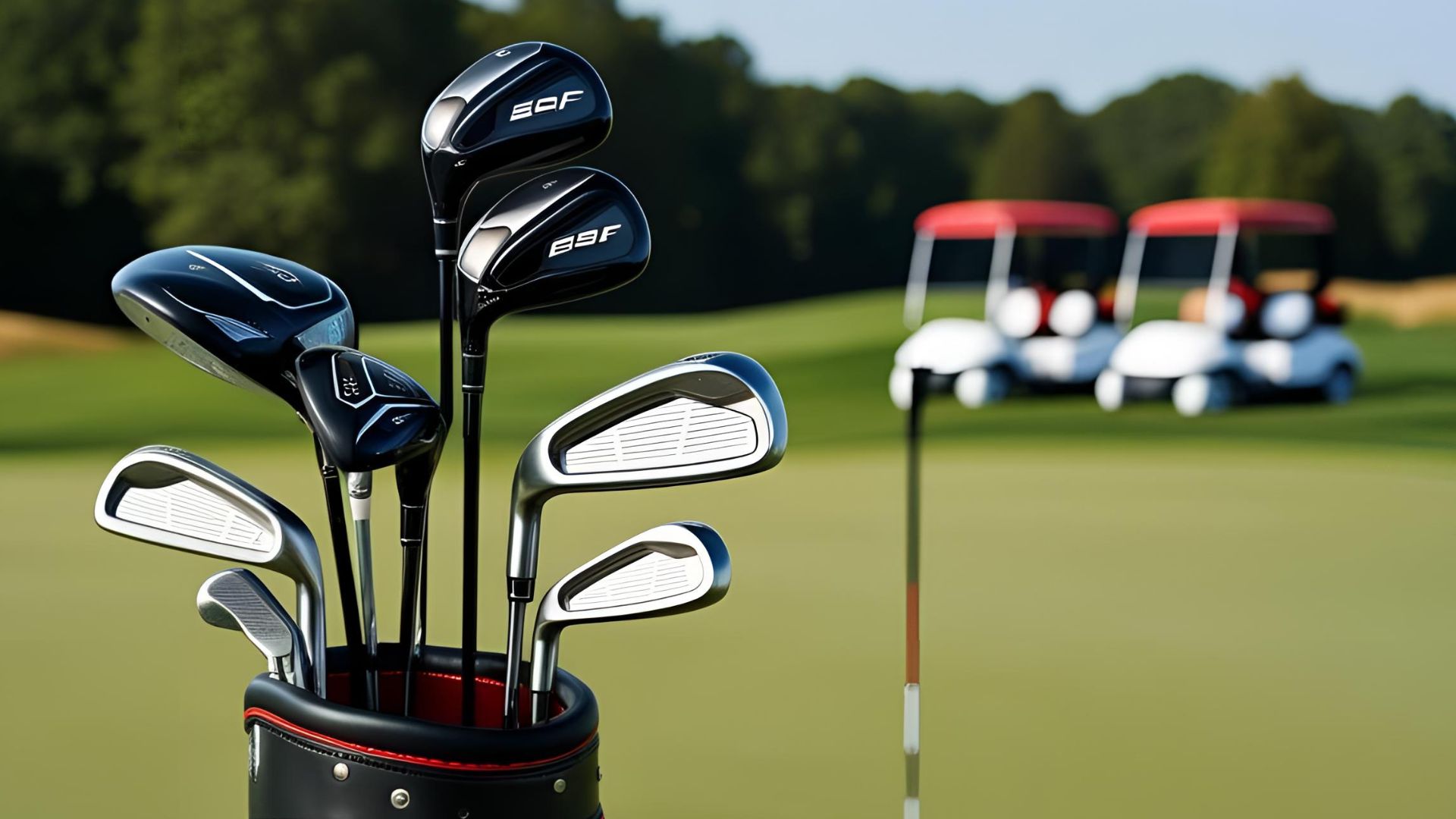
Choosing the right clubs can make a significant difference in your performance on the golf course. One of the most common equipment decisions golfers face is whether to carry a hybrid or a long iron. While both clubs are designed to hit long approach shots, they perform differently and suit different types of players. Understanding the strengths and weaknesses of each option helps you build a bag that complements your swing and improves your scoring opportunities.
The debate over Hybrid vs Long Iron has become even more relevant as modern club technology continues to evolve. Many professional golfers still carry long irons because of their precision and workability, while countless amateurs have replaced them with hybrids for their forgiveness and ease of use.
This guide compares hybrids and long irons to help you determine which club deserves a place in your golf bag.
Understanding the Difference
Although hybrids and long irons often cover similar distances, their designs are completely different.
A long iron features a compact clubhead, thinner sole, and lower profile. It resembles the traditional irons found throughout a golf set but is typically more difficult to strike consistently because of its lower loft and smaller sweet spot.
A hybrid combines characteristics of both irons and fairway woods. It has a larger clubhead, wider sole, and lower center of gravity, making it easier to launch the ball into the air. These design differences explain why many golfers find hybrids more forgiving.
Why Many Golfers Prefer Hybrids
For the average golfer, forgiveness is one of the biggest advantages of a hybrid. The larger sweet spot helps maintain distance and direction even when contact isn’t perfect.
Hybrids also launch the ball higher than comparable long irons. This higher trajectory makes it easier to stop approach shots on the green, particularly from longer distances.
Another benefit is versatility. Hybrids perform well from fairways, rough, light bunkers, and even uneven lies. Their wider sole glides through thick grass more effectively than a traditional long iron, making them valuable recovery clubs as well.
The Advantages of Long Irons
Despite the popularity of hybrids, long irons still offer important benefits for certain golfers.
Skilled players often prefer long irons because they provide greater control over trajectory and shot shape. Lower ball flights can be particularly useful in windy conditions, where excessive height may cause shots to lose distance or accuracy.
Long irons also produce more predictable roll after landing. Golfers playing firm links-style courses frequently appreciate the ability to hit controlled, penetrating shots that release toward the target rather than stopping quickly.
For players who consistently strike the center of the clubface, long irons remain highly effective scoring tools.
Who Should Choose a Hybrid?
For most recreational golfers, a hybrid is the easier club to hit consistently. Beginners, high-handicap players, seniors, and golfers with moderate swing speeds often benefit from the added forgiveness and higher launch that hybrids provide.
The wider sole helps the club move smoothly through rough and imperfect lies, reducing the likelihood of heavy or thin shots. Because hybrids require less precision at impact, they inspire confidence on long approach shots and difficult recovery situations.
If you struggle to get your long irons airborne or frequently miss the center of the clubface, replacing them with hybrids can lead to immediate improvements in both distance and consistency.
Who Should Stick With Long Irons?
While hybrids suit many golfers, long irons still have an important place in certain bags. Low-handicap golfers and players with faster swing speeds often prefer the precision and workability of a traditional long iron.
Long irons allow experienced golfers to control ball flight more effectively. They can produce lower, penetrating shots that perform well in windy conditions and provide greater control over shot shape. Golfers who enjoy hitting fades, draws, or punch shots may appreciate the versatility that long irons offer.
If you’re a confident ball striker who consistently makes solid contact, long irons remain excellent options for specific course conditions.
Distance Isn’t the Only Factor
Many golfers compare clubs based solely on distance, but carry yardage tells only part of the story. Launch angle, peak height, spin rate, forgiveness, and stopping power all influence real-world performance.
A hybrid may travel the same distance as a long iron while landing much softer because of its higher trajectory. This can make a significant difference when attacking greens from long range. Conversely, a long iron’s lower flight may produce more roll, making it useful on firm fairways or links-style courses.
When deciding between a Hybrid vs Long Iron, think about how the ball behaves after it lands rather than focusing only on total distance.
Course Conditions Matter
The courses you play most often should influence your equipment choices.
Golfers who frequently play soft parkland courses with elevated greens often benefit from hybrids because their higher ball flight helps stop approach shots quickly. On the other hand, golfers who regularly compete on firm, windy courses may prefer long irons for their lower trajectory and controlled rollout.
Also consider the lies you encounter most often. Hybrids generally perform better from thick rough, while long irons excel from clean fairway lies where crisp contact is easier to achieve.
Try Both Before Making a Decision
The best way to settle the Hybrid vs Long Iron debate is to test both clubs under realistic conditions.
Visit a practice facility or professional club fitter and compare launch angle, carry distance, ball speed, dispersion, and overall consistency. Don’t focus only on your best shots. Instead, evaluate how each club performs on average swings and slight mishits.
Many golfers discover that hybrids provide more reliable results over multiple swings, while better players sometimes prefer the precision of a long iron. Personal performance should always outweigh general recommendations.
Common Mistakes Golfers Make
One common mistake is carrying a long iron simply because it came with the set. Equipment should match your ability, not tradition. If a hybrid helps you hit more quality shots, there is no disadvantage in making the switch.
Another mistake is assuming every hybrid automatically replaces a specific iron. Loft, shaft length, and club design vary by manufacturer, so always compare actual distances instead of relying on the number stamped on the club.
Ignoring proper club fitting is another costly error. The correct shaft flex, lie angle, and loft can dramatically influence performance regardless of whether you choose a hybrid or a long iron.
Final Thoughts
Choosing between a Hybrid vs Long Iron ultimately depends on your swing, confidence, and the types of courses you play most often. Hybrids offer outstanding forgiveness, easier launch, and greater versatility, making them ideal for the majority of recreational golfers. Long irons, however, continue to provide unmatched trajectory control and shot-shaping ability for skilled ball strikers.
Rather than following trends, build your golf bag around clubs that consistently produce your best shots. Testing both options under real playing conditions will reveal which one helps you hit more greens, recover more effectively, and lower your scores.
The right club isn’t necessarily the one professionals carry. It’s the one that gives you the greatest confidence every time you stand over the ball.
FAQ
1. Are hybrids easier to hit than long irons?
Yes. Hybrids generally have larger sweet spots, higher launch, and greater forgiveness, making them easier for most golfers to hit consistently.
2. Why do some professionals still carry long irons?
Many professionals prefer long irons because they provide better trajectory control, shot shaping, and performance in windy conditions.
3. Can a hybrid completely replace a long iron?
For many golfers, yes. Hybrids often replace 3-irons, 4-irons, and sometimes even 5-irons while offering similar distance with greater forgiveness.
4. Which club performs better from the rough?
Hybrids usually perform better because their wider sole and lower center of gravity help the club move through thicker grass more efficiently.
5. Should beginners choose hybrids or long irons?
Most beginners benefit from hybrids because they are easier to launch, more forgiving on off-center strikes, and generally produce more consistent results.