New to Golf? Here’s Your No-Judgment, Step-by-Step Playbook
So you’re thinking about picking up golf? Great choice. It’s fun, social, challenging—and honestly, addictive once you catch the bug. But we get it—golf can be intimidating when you’re just starting out. That’s exactly why we created this beginner golf guide for men: a no-fluff, step-by-step roadmap designed to help you start strong and swing with confidence.
No worries. This guide is built just for you—the everyday guy who wants to learn golf the right way, from the ground up. No fluff. No pressure. Just clear, step-by-step advice to get you swinging with confidence.
Step 1: Understand What Golf’s Really About
Golf isn’t just a game—it’s a mental and physical challenge wrapped in fresh air and friendly competition. You’re not aiming for perfection. You’re simply trying to get the ball in the hole in fewer strokes than the course allows. That’s the essence.
Ultimately, it’s you vs. the course. That’s the beauty.
And guess what? You can do this. No matter your age or fitness level, golf meets you where you are.
Step 2: Learn the Basic Rules and Scoring
How Scoring Works:
- Par: Expected strokes to complete a hole
- Birdie: 1 stroke under par
- Bogey: 1 stroke over par
- Double Bogey: 2 over par (it happens!)
Key Rules to Know:
- Always play your ball as it lies
- Take a 1-stroke penalty for water hazards or lost balls
- Respect pace of play and repair any damage (divots, ball marks)
Rules can seem overwhelming at first, but don’t worry. You’ll pick them up naturally as you play more.
Step 3: Get Familiar With the Golf Clubs
A full set includes up to 14 clubs, but beginners can start with fewer:
- Driver – For long tee shots
- Fairway Wood or Hybrid – For long fairway shots
- Irons (6–9) – Versatile for mid-range shots
- Wedge (Pitching/Sand) – For chips and bunkers
- Putter – For play on the green
This beginner golf guide for men recommends starting with 6–8 clubs to learn the basics and build confidence.
Step 4: Choose the Right Beginner Gear
Golf Clubs:
Look for “game improvement” sets. They’re forgiving and make solid contact easier. Brands like Callaway, Wilson, and Cobra are excellent starting points.
Golf Balls:
Use soft, low-compression balls like Srixon Soft Feel or Callaway Supersoft. These help reduce slices and add distance without overthinking.
Golf Accessories:
- Lightweight stand bag
- Glove (left hand if right-handed)
- Tees, towel, ball marker, divot tool
And don’t forget water. Hydration on the course is key, especially on hot days.
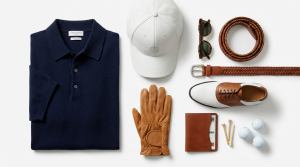
Step 5: Dress the Part
Golf has a light dress code. You don’t need luxury brands, just proper attire:
- Collared polo shirt
- Golf shorts or pants (no denim)
- Sneakers or golf shoes with grip
- Hat or cap for sun protection
Looking good helps you feel confident—and confidence helps your swing. Many courses also require a collared shirt, so it’s always a safe bet.
Step 6: Master the Swing Fundamentals
The Grip:
Start with a neutral grip. Your hands should work together—not battle for control. Hold firm, but not tight.
Stance & Posture:
Feet shoulder-width, knees flexed, back straight, chin up. Athletic, not rigid.
The Swing:
Begin smoothly. Rotate your torso and shift your weight forward. Keep your head steady and finish in balance.
Start slow. Prioritize control over distance. You’ll add power as your swing improves.
Step 7: Learn How to Practice the Right Way
At the Driving Range:
- Begin with a wedge
- Work up to mid-irons, then driver
- Focus on contact and consistency—not distance
At the Practice Green:
- Chip from various lies
- Putt from short to long range
- Learn to feel speed and read breaks
Practicing a little each week will speed up your progress.
Step 8: Play Your First Round
Start Small:
Try 3 or 9 holes first. Full 18 can wait.
Play Smart:
Stick to shorter tees and relaxed courses. Focus on fun, not the score.
Playing with friends or joining beginner leagues makes it even more enjoyable. You don’t need to go it alone.
Step 9: Learn the Golf Etiquette
- Don’t talk during someone’s swing
- Always stand out of a player’s line of sight
- Rake bunkers and repair divots
- Keep pace—don’t hold up the group behind
Etiquette is as essential as skill. It makes the game smoother for everyone. When in doubt, just be respectful and courteous.
Step 10: Keep Improving Without Going Broke
- Take beginner lessons (even just one or two)
- Use free YouTube tutorials from pro instructors
- Practice with alignment sticks or putting mirrors
- Join local leagues for fun and improvement
- Download free apps for GPS and scorekeeping
With this beginner golf guide for men, you’re already ahead of most new players.
Bonus Tips for New Golfers
- You’ll hit bad shots—laugh it off and move on
- Don’t compare your swing to others’
- Focus on one improvement at a time
- Celebrate little wins (a clean chip, a two-putt, a fairway hit)
- Most importantly, keep showing up
Progress comes from repetition, reflection, and consistency—not perfection.
Conclusion: You’ve Got This
Golf isn’t about being perfect. It’s about progress, patience, and enjoying the challenge. Whether you want a new hobby, an outdoor escape, or a competitive outlet, golf has something to offer you.
Now you’ve got the step-by-step playbook. All that’s left? Grab your clubs and tee it up.
FAQs
How many clubs do I need as a beginner?
Start with 6–8 clubs: a driver, hybrid or fairway wood, 2–3 irons, a wedge, and a putter.
How do I choose a beginner golf set?
Look for cavity-back irons, large clubheads, and lightweight shafts. Starter sets are often labeled for beginners.
How long does it take to get good at golf?
With regular practice, many players build confidence within 6–12 months.
Do I need lessons?
They help. Even 1–2 beginner sessions can correct mistakes early and speed up improvement.
Can I play if I’m not athletic?
Definitely. Golf relies on technique, not strength. It’s a game anyone can enjoy at their own pace.